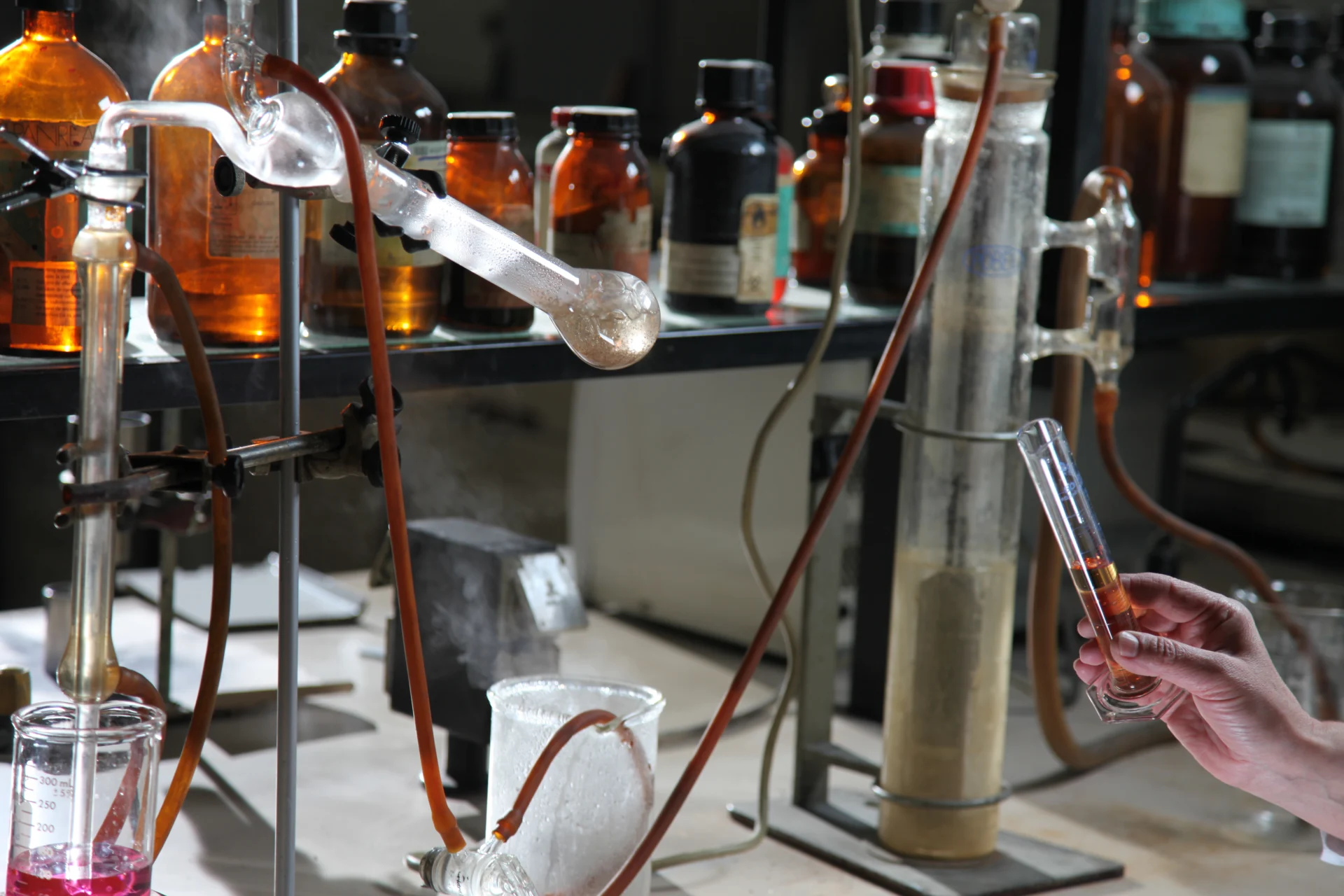
Talking about innovation in a material that is more than 100 years old seems like a contradiction, but at FENOQUÍMICA we continue to develop phenolic molding compounds to adapt them to the most demanding environments.
While it is true that the main market for our phenolic compounds is cookware and appliances, their high resistance to extreme temperatures, fabulous electrical insulation and weather resistance make them ideal for many other uses. That’s where innovation comes into play. In this post, we will talk about projects that transform phenolic molding compounds, which is more than 100 years old, into high-tech materials suitable for its use in fields such as renewable energies, automotive and aeronautics or power electronics.

Projects Combining Sustainability and Innovation
At the beginning of 2023, we had the opportunity to bring together two of the pillars of our company, sustainability and innovation, in one project. A customer offered us the possibility of collaborating in a project aimed at obtaining renewable energies. Specifically, it was about developing a friction material to equip wind turbines. Specifically, these are two phenolic molding powders reinforced with graphite that manage to modulate the coefficient of friction reducing the noise pollution that can be generated by windmills.
Another example is the joint development we are carrying out with B-Circular (a spin-off of the CSIC). The aim of this project is to put on the market a phenolic moulding powder reinforced with recycled carbon fibre and glass fibre and, in this way, to make it easier for the aeronautical and automotive sectors to incorporate high-performance materials with a high percentage of recycled material, thus contributing to the reduction of the waste generated by these two industries while increasing their participation in the circular economy.
The Properties of Thermal Conductors

The two previous projects represent an example of the technical capabilities of our team, but innovation is always going one step further. The FENOQUÍMICA technical team set out to take advantage of the exceptional properties of phenolic resin with respect to its ability to “wrap” mineral fillers and transform a material that has traditionally been an insulator into a conductor.
Yes, when we explain that we have transformed a thermal insulator into a thermal conductor, but maintaining electrical insulation, we are asked what the point of such a material is. As it turns out, thermal conductors are of vital importance in power electronics.
- They prevent overheating in electronic components such as CPUs, GPUs, and power transistors. Heat generation can exceed safe limits, which can lead to thermal runaway or permanent damage.
- They improve performance by allowing components to run at higher speeds without limitations.
- They improve reliability and service life, reducing wear, especially in semiconductors and batteries, reducing failure rates and extending operational life.
- They guarantee safety in electric vehicles or industrial electronics. Poor thermal control can pose fire or explosion hazards.
- They allow miniaturization. As devices become smaller and more powerful, managing heat in compact spaces becomes more complicated.
- And finally, efficient conductors reduce the need for active cooling (such as fans), saving energy and reducing noise.
In this same range of products for power electronics, we developed a magnetic phenolic molding compounds with up to 90% ferrite with the aim of being able to manufacture ferrite cores without having to do machining or sintering, reducing the cost of producing NFC antennas.
If you have a project that requires a company with a solid track record in innovation, at FENOQUÍMICA we want to be the one to accompany you on that path.