Quality is one of the pillars of FENOQUÍMICA. We could refer to the fact that we have ISO 9001:2015 (international reference for quality management systems), but in this post, we would like to delve into how we ensure that each batch manufactured meets the highest standards of performance, durability and safety.
The process begins when the raw materials arrive at our facilities. We select the samples received and laboratory techniques that carry out exhaustive quality controls, to guarantee the reliability of each product.
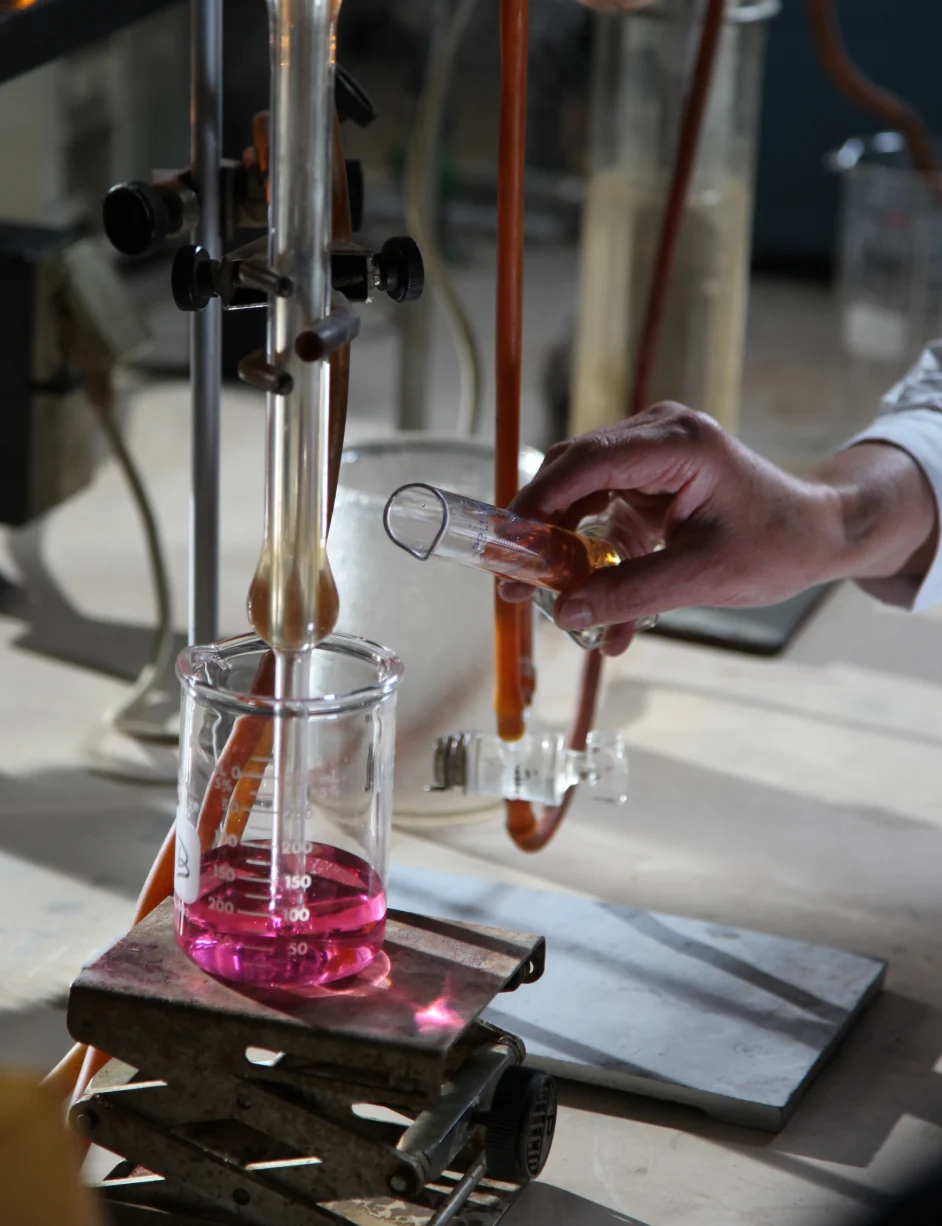
Raw material quality controls
- to ensure that the fluidity and reactivity are correct,
- the free phenol, to check that it complies with safety regulations
- and humidity, since excess humidity can cause problems in the molding powders.
Vegetal charges are the next most important part. We measure:
- the fineness to ensure the surface quality of our phenolic compounds,
- the ashes so that our customers do not have problems with wear and tear in their tooling and,
- of course, the humidity since, as in the previous case, this can cause incidents in the processing.
Regarding functional charges, it is checked that the parameters described in the certificates of analysis correspond to the needs of our process.
Manufacturing and quality controls of the finished product
The next step is the manufacture and control of the finished product. In this respect, the plastographic analysis (Brabender) is the one that provides us with the most information. Among the parameters provided by this instrument, we selected three;
- the point of maximum fluidity (or point B) which indicates the ease of the material to fill the mould;
- the plasticity time (tV) which allows us to know how long the product is mouldable and which is of great importance to know if the product can fill large or small moulds;
- and, finally, the reaction time (tR) which serves to know its reactivity, i.e. how fast the reaction will be and thus help our customers‘ productivity.
We also measure volatiles, which as we have already mentioned, water can cause incidents in the molding powders. A lack of moisture will cause the product to not fill the molds well, but too much can cause water or steam marks on the finished parts.
The control of the granulometry and bulk density in quality controls of phenolic compounds is very important to achieve stability in industrial processes. The more stable they are throughout the production of FENOQUÍMICA, the better their industrial application will be. That is why all our batches undergo a homogenization process that guarantees stability in the process of our customers.
Mechanical, thermal, and chemical resistance testing

So far, we have controlled parameters that affect our manufacturing process and that of our customers, but there is another very important part, which is how the product will respond to the end user.
To do this, we mold plates with our molding powders and carry out mechanical, thermal and chemical resistance tests.
Among the mechanical tests, it is worth highlighting the impact resistance test (Charpy Test) to ensure its mechanical properties and the shrinkage test, so that the parts manufactured by our customers are within their tolerances.
Regarding thermal tests, the most important are those of deformation with temperature, so that we make sure that they resist heat while maintaining their shape, the thermal stress test that indicates the maximum temperature that our products can withstand without damaging and the flame resistance that ensures that our products pass the UL94 V0 certification.
Finally, weather resistance, which is a chemical resistance test, is determined by the water absorption test.
These are some of the more than one hundred tests we can perform in our laboratory, but if any special properties are needed, we have done tests outside our catalog to meet the specific needs of our customers.