
It is often said that polymeric compounds were born with the discovery of “Novolak” by Leo Baekeland in the early years of the twentieth century. This is not exactly the case, as early as 1833, Jöns Jacob Berzelius had introduced the term polymer, which derives from the Greek polis (many) and meros (segments), that is, repetitions of the same chemical structure. In fact, Leo Baekeland’s career had long since taken off with the invention of the VELOX photo paper that he had sold to Eastman Kodak. At that point, and because by contract he had to find another area to focus his chemical development, he looked for a problem that offered ‚the best opportunity to obtain the fastest possible results‘.
At the same time, Adolf von Baeyer had experimented with phenols and formaldehyde, having come up with the preparation of a black paste that he considered useless in his research on synthetic dyes, for which he would end up receiving the Nobel Prize in Chemistry.
Baekeland began to investigate the reactions of phenol and formaldehyde, carefully controlling and examining the effects of temperature, the pressure came to obtain a substitute for shellac which he called „Novolak“. This synthetic resin is the first 100% synthetic material.
Baekeland continued to investigate this type of compound and arrived at the phenolic molding compound that we know generically as Bakelite and that more than 100 years after its discovery, is still widely used.
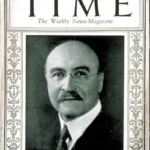
In fact, his impact on early 20th-century society was so significant that Leo Baekeland was on the cover of TIME magazine in 1924 highlighting the heavy use of his material „from ashtrays and rosary beads in radio casings to distributor caps and telephone casings.“
Properties of Thermosetting Materials

One of the questions that arise because of the widespread use of phenolic resins is the following: How can it be that at the rate we are advancing in engineering we are still using the first synthetic plastic? The answer is obvious, because its properties are still excellent. Their mechanical, chemical, temperature resistance and above all their electrical resistance make phenolic molding powders a very attractive material even today.
In fact, it was its excellent performance as an electrical insulator that prompted its use in radios, telephones and electrical installations from the 1920s onwards, allowing accessibility to these developments to the working classes and unusual economic growth. Today, it remains the material of choice for electrical insulation and structural support in modern electrical systems and on the boards of many electronic equipment.
Current Applications of Thermosetting Compounds

The development of the automotive industry also owes a lot to phenolic compounds. Its great thermal and electrical insulation capacity, its chemical resistance to petrol, automotive oil, brake fluid, but above all to the weather, made it possible to create resistant, functional and, above all, durable parts at a very low cost.
In addition to these two fields of application, it is in home solutions that the use of Bakelite has the greatest impact. Switches, rotary knobs for ovens and dishwashers, frying pan handles, knobs and handles made of phenolic compounds offer properties such as thermal resistance, electrical insulation and durability that have not been matched by any other material.

With more than 100 years of history, phenolic compounds are still at the forefront of materials in terms of performance, as demonstrated by their use in ESA’s Galileo probes or as an essential component of the heat shield used by NASA in its probes, but that is another story.